Pages

Tuesday, November 19, 2013

Writing for Free, Reading for Free: The Economics of Academia and Publishing Today

Academics entering the media world tend to move from one exploitative arena (low-wage academic work) to another (unpaid freelance writing). But writing must never be an act of charity to a corporation. Ask for what you are worth—and do not accept that you are worth nothing. Insisting on payment for your labor is not a sign of entitlement. It is a right to which you are entitled.


Medium -- a new iteration of publishing/sharing writing/writing for free. Medium offers us all an audience because praise should be pay enough (though now, apparently, they are paying some writers decently). Medium was founded by Evan Williams (also, a liquor), who also founded Blogger (write for free -- for yourself and your friends), and has been in charge (possibly a founder? multiple stories abound) of Twitter (write for free, briefly, to the world, your friends, and clients). On Here and Now recently, Williams was asked about his new venture, and he described the year-old platform as providing journalism and stories to a wide audience who just can't find it elsewhere, apparently. He also emphasized the ability to share one's writing with the world, which writers just can't do elsewhere, apparently. Those darn editors and gate-keepers -- I thought that the internet was supposed to have knocked them down already? Williams evaded the interviewer's question of what void he was trying to fill, explaining that, really, this was a longer twitter. However, what he is actually replacing is the curated, edited magazine.

Sunday, June 2, 2013

Book Covers I Love


I am super into the silhouettes and paper cut outs I've seen all over the place lately, and I love the ways in which people are using those on book covers now, as seen in the next two images:

The Monsters of Templeton by L Groff
The Snow Child by Eowyn Ivey


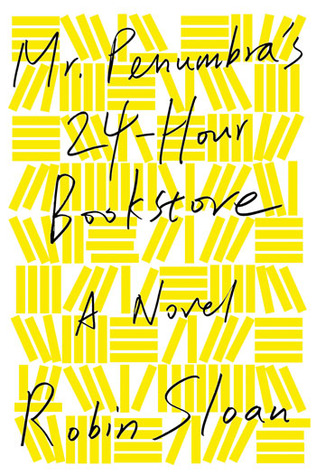
Mr. Penumbra's combines my favorite things: books, San Francisco, and something slightly magical. For a girl whose first job was selling books in a little indie bookstore on the CA coast, this book is irresistible  And the cover's use of neon that looks like highlighter -- and which glows in the dark -- is a fabulous wink at the shadow of "Penumbra" (*polishes her high school Latin*) and the fluorescence of a 24-hour bookshop.
Mr. Penumbra's 24-Hour Bookstore by Robin Sloan


Flora feels super-traditional, but with the edge of the initial letter of the title falling off the front cover, there's a bit of an edge. I love the grace and drama of the title, which looks like a signature, and the bright punch of the author's name against the blue of the dress.


Flora by Gail Godwin

Also, I want to read all the books.

Thursday, May 30, 2013

Money and Motivation

One of the ways in which spending your twenties as a grad student in a humanities department warps your view of yourself and your world is with regard to self-value. Not just "I must be a shitty person and scholar because I don't get this 'body without organs' " deal, but the work we do for which we are not paid, and the work for which we get paid so very, very little.

In graduate school, I planned events, I entered data, I taught myself software programs, I compiled webpages, I proof-read, I managed other graduate students, I researched, I read, I wrote, and I taught.

And for few of these gigs was I paid, and then, it was not well. This translates well to academia, where service and research are the perqs that you earn by teaching. You are grateful to be able to have the time and space to voluntarily, on your own time, research, serve on committees, mentor students, etc.

But this mindset, I am finding, is counter to everything outside of academia. I do not think the importance and value of a job can be measured by its salary. I do not think that those who earn $30,000 must or should work less hard than those who earn four times that. So that's good. But this belief in dedicating all to a job -- and in editing and writing "on the side" of the "real" job -- is not always helpful to getting ahead. I ask myself, is my genuine wish to work longer hours than I am paid fair to me and my partner? Really, I should be compensated for all time worked, so am I being a sucker by gladly bringing work home with me? Or since I am young and trying to build a career, should I be grateful for everything and anything I can get?

What's the difference between an underpaid, part-time editor working harder than s/he's being paid for and a young engineer at a startup sleeping at the company HQ and dedicating him/herself to their launch date? Is it just money? compensation? prestige? Or are they both naive, in fact, and should be rallying with other workers to demand fair wages?

One of the consequences of our new economy seems to be both flexibility and instability. If we are all eminently replaceable, we each must always be working harder than we are being paid in order to be the most valuable person to the company, it seems to me. Maybe all of the American economy is just catching up to a trick that academia's been playing on its citizens for many decades longer.

Tuesday, May 28, 2013

Where I am today

I finished my dissertation at 10 AM on March 28th, 2013. I was so worn out by the end that I am not sure that finishing was either a relief or a moment for celebration. It was more of a "This? This is what I had to do? All those years of paralysis and confusion and all I had to do was this?"

I felt let down by myself and, to be perfectly honest, by my advisors. I'm very proud of three of my chapters and I am glad I finished the last one and the intro. But, I am disappointed that despite my grand, ambitious ideas for the shape of the dissertation, it ended up being 200 pages, intro + 4 single author chapters. What a yawn. I don't want to know how many errors were in the bibliography. I still feel like as much of an impostor as I did throughout the process, only now I have a degree I feel like I earned through sheer forbearance rather than skill or knowledge. I don't think I know more now than I did six months ago, I just finally put my thoughts on paper. I feel like I wandered blindly for so long and spent so long worrying about their responses that I wasted years. One of my committee members apparently did not know when the submission deadline was and gave me feedback to totally revise my intro three days after I had submitted the document. I don't blame him at all -- I hadn't given him much time in the end to respond.

One of the unconscious reasons behind procrastination, for me, is that by cutting down on the time given to my advisors, and limiting the time I had left, I knew that they couldn't ask me to do huge revisions. Even if that would have been better for the scholarship. There simply wouldn't be time, so we band-aided the poor diss and shuffled it off stage.

I decided to embargo my dissertation for the maximum time allowed, two years, partially because I am telling myself that I will publish better versions of my chapters, and partially because I am deeply ashamed that it isn't better. I had the chance to really study under my advisors, and I never took it because I was too afraid of their criticism and felt too stupid to engage them in real, deep conversations about poetry, literature, and theory. I never even read half the books I wanted to, and what is a sadder take away from eight years of graduate study of literature?

I hope to revise my intro over this summer, and maybe tack on that last conclusion I intended to write, and correct any glaring typos or bibliographic problems. I also would like to turn some of the lost material into articles -- the chapter on the state of the poetry-publishing industry in Ireland and my Heaney/Boland chapter that never materialized.

I want to apply for academic jobs this fall, even though I got nowhere last year. But my current editorial job is looking shaky -- the publisher is in some financial straits, and I'm not sure my direct boss is going to stick it out. I feel very nervous, and I need to find some work immediately in case everything goes pear-shaped, which is pretty hard to do when you are new-ish to both an area and an industry.  We'll see.

Friday, March 15, 2013

Mad Dash

I have had about ten days to work  on my introduction, and got about fifteen pages written -- all of which summarized Irish history -- which took a lot of work. Then I had a meeting with the helpful professor at the local campus, who strongly suggested that this was going to be too broad and too long and wasn't a real introduction to my project.

So, what I need to do instead is explain my argument and the reasons for it. In other words, do exactly what is so difficult that I do everything I can to avoid it. I would much rather just summarize Irish history for a while and hope that explains why I am doing my study. That meeting was on Tuesday, and I've just been clenched up in anxiety and frustration since then. I think I've written half a sentence since. I was supposed to turn this in yesterday, and instead it's almost two and I've got half a sentence done. I feel sick to my stomach with how hard this is going to be and how little time I have to do it in. My main argument is "this is different! and cool! just like Ireland!" and I've been repeatedly told this isn't a good enough thesis, which is one of the things that disenchants me about academia. Why does a close reading + historical context-based reading have to say anything other than "look at what I found"?

Tomorrow is full, too: I had a sealant recently applied by the dentist crack so I had to make an emergency appointment. My back hates me spending 12 hours at my deck, so I need to get a massage, and I was supposed to have lunch with a colleague tomorrow, but I didn't realize we had a dinner scheduled with friends. My boyfriend doesn't want me to skip out on our regular dinner with friends, so pushed me to cancel my lunch instead. I strongly do not want to attend this dinner. I want the hours to work or sleep. I don't care as much about these regular dinners as he does, probably because they are more his friends than mine.

I tried to get up early today to work, and I did read an essay that was great, but I really didn't sit down to write until 6 PM, in my usual fashion. I genuinely don't know what happens to me during daylight hours.

I've taken the last two weeks off from the publishing gig to work on my diss, and apparently there have been numerous crises. I am looking forward to digging back in, but having these two weeks off has also been great. I am not exhausted at 5 PM, I don't have to show up anywhere at a particular time, my boyfriend is also working from home, so we get to hang out, and I haven't had to negotiate once. Back on Monday, though.

Monday, March 11, 2013

Typography and Book Design

I am mostly an amateur enthusiast when it comes to book design and typography. I have handset letterpress and made my own very tiny book, I have read guides on typography (for fun, mind you), and have studied the material construction of books of poetry as part of my dissertation. So, I know the terminology, but I have not worked with inDesign, I've never worked with commercial printers, nor have I worked within comercial constraints.

Still, I have OPINIONS -- of course I do. And when our galleys came back with a half inch, max, of margins, 12-point Times New Roman font, and single spacing, I nearly flipped. I've already explained several times that you can't use a regular old serif typeface (ahem, "font" so I don't sound like a ponce) as your typeface for a title. And that you should match your title page and chapter headings closely in spirit to the typeface used on the cover. All you have to do to know that is look at literally ANY decent book.

These galleys looked like someone just took a Word file and printed it -- which was basically what was done. I felt bad, because it had looked fine as a PDF, so I OK'd it. It was astonishing how different it looked on screen and in print. Amazing how cramped and dense 35 lines per page looks compared to 25.

I think one thing my grad degree has taught me is how to learn the conventions of one's genre, and how to appear to belong. And how to teach yourself everything, since no-one else will do it for you. So I get frustrated when people don't do that.

Thursday, March 7, 2013

Three Weeks to Go

All of February, and the first five days of March, I was working on a chapter about the elusive, creative  Irish poet Catherine Walsh. I find her asyntactic, paratactic writing to be extraordinarily challenging to make an argument about, because to me, it could be so easy to prove wrong. This, I've realized has been a huge problem of mine in grad school: I can always see the holes in my own argument, and that not only paralyzes me, but I keep inserting caveats and undermining my own claims. In high school I was an attorney in our Mock Trial program for  three years. I was very good at it, but partly because I always felt that I was lying because I could see all the holes and gaps in my argument and the strengths of the oppositions, so I frantically tried to fill those gaps in as much as possible. Yet, the feeling of telling half-truths was always there.

But, in any case, I finished writing 40 pages. I sent it off, despite the fact that I knew there were huge problems in it (like.... not having a convincing argument), but I had to move on, so I let it go. I promptly received feedback from one of my committee members to the effect that he loved my close-readings, but did not perceive a strong structure holding it together, and wants me to rewrite/revise. Which I expected. I didn't expect the praise for the readings, nor for him to get back to me so quickly!

I'm trying to move forward to writing the intro now. At this point, sans intro, I believe I would estimate my dissertation to be about 140 pp. A bit light, but that doesn't include the interviews I'll be including. I've been looking at tons of intros -- they vary from 15-50 pages, and I've even heard of a 95 page one! I am just hoping mine will be 30. I am excited about it, partially because it requires mostly a literature review and historical background for the project. I think it should be a matter of positioning myself among the other scholars.  My dissertation is light on footnotes, especially this most recently chapter, which I am afraid might be symptomatic of a lack of deep contextualizing reading. Hopefully I'll have the opportunity to make it up in the intro.

I am taking time off from work to finish this project -- thank goodness my boss is OK with that. Only 1 more week, though, and then I'm back. That means 7 days to write the intro, then, as quickly as possible, address issues with the first  chapter, add another 10 pp to turn 1 chapter into 2 shorter ones, and rewrite my 3rd chapter. I hope the latter Herculean tasks can be accomplished in 10 days.

Simultaneously, I am trying to oversee production, acquisition, editing, etc for the publishing company, Right now, I am taking a backseat, but that doesn't stop the publisher complaining to me of costs (maybe he shouldn't have an amateur do the typesetting and maybe he should pay his printers) and the authors complaining to me about missing checks. The only thing I can do abut either of those is nag the people with money.

I joined a website called Versatile Ph.D. recently. Great forums and support for making a career outside of academia. My only concern is how many of the English Ph.D.s are now either dissertation editors (perpetuating the very system that they left) or are freelance editors. Both seem like unsavory choices, to me, but maybe I only see the instability of freelance work and not its upsides.

OK: I need to get a page or two written today, and then I will be on the right track! 5 pages every day for the next 7 days will sort me out!