Pages

Wednesday, February 7, 2018

Still sad, still angry, still compromised

Today was anniversary of the first women's march, in 2017. Spurred by Trump's victory and what that says about how the men and women who voted for him value lives other than their own (to wit: not at all), we gathered to assert our values, to shake him with our powerful outrage, to join together imagining a better future, and to feel less alone. There are millions of women and men who are outraged at the efforts by our leaders to reel us back to the bad 'ol days.

On a personal note, I have felt disappointed in myself that I am not living the values I espouse to the hilt. Today at the 2nd women's march that hit home. The speakers were calling for intersectional social justice -- what are we doing to help the homeless? How are we engaged in choices that thoughtlessly oppress, or which reinforce racial and gender disempowerment?

When we look out for ourselves first, and we engage in protecting ourselves, we use tools that are infused with capitalism and patriarchy. We own our house and we own a condo that we rent out. We are part of Oakland's changing face, and while we are not technically gentrifiers (we purchased our home from a family of color who owned and lived in the home, so we did not displace renters and we increased the personal wealth of that family), we benefit from gentrification.

I am currently working for a company whose ethics I am waffly about. It is entirely growth-focused, determined to produce more and more books, the rapacious extraction capitalism that says everyone needs to buy buy buy all the time. The books we do can prey on people's insecurities, promising health through fasting or juice diets. These books are pure content churn; there's not even the excuse that we are producing art when we produce these commodities.

I have written 5 reviews for the SF Chronicle this year, and one for the Women's Review of Books. That's all the writing I've done. Parenting and working full time has taken so much away from being able to do projects and events that make me happy that I'm putting having another child on hold. I have read almost no poetry. I have written no poetry other than scrawling depressed journalings. I haven't even had a chance to think about it. This is the first year that's been the case EVER.

I edited one novel and reviewed 300 queries for an agent friend for free. I was late on both projects. Severely late. Took 12 weeks when they were supposed to take 6 late.

I thought I'd be able to keep up with this blog, but I haven't. I'm working so much, but not prioritizing projects, or even reading, because when I'm not working weekends, I'm falling behind.

My work is not fulfilling in any kind of way other than to my pocketbook. It's fun, and the fast pace is actually a good match for me because I can't really get lost on over analyzing and delaying like I am wont to. But I continue to feel that I have completely sold out and screwed myself.

No one at Counterpoint is going to hire me, ever. That was my hope. I no longer have bonafides. I have sold out. I just internally keened when I read Yuka Igarashi's professional bio -- Granta. Catapult. Soft Skull. Prestige is the coin of the realm, and my skills and network I am developing at Callisto will have no value outside of this field. I've locked myself out, and no-one I care about cares who I am anymore. I have no time to attend readings  -- or at least, I don't prioritize that or put it on my calendar.

I do get to bike to work, if the weather's good, and I spend more time with my son. But during the week it's still not any fun time: it's get dressed-feed-him-change-diaper-get-to-school-bike-go go go hustle hustle hustle, and same thing again at home.  There's so little opportunity for connection. It's just me constantly trying to rein in my temper as he is so unable to do things for himself while able to only make messes and NOT want to do whatever I need him to do.

Not to mention that what I love about editing is being stripped away.  I have the title of editor, but I am basically a sales person.

Sunday, January 1, 2017

Taking Initiative

It's the first day of 2017, and it's a bright, quiet afternoon in Oakland. 2016 was a year of unexpected educations. My son was born, and I learned about myself that I can act only in his interests without feeling like I am gone or utterly changed. I took an ambitious job, and I did not succeed in it, closing down an avenue I thought was going to define my life.

December of 2013, December of 2015, December of 2016 -- all years in which I left positions, variously despondent and hopeful. Januaries are quiet winter mornings that open up possibilities.

What I would like for myself in 2017 is to move from possibilities to acting. From dreaming and ideas to purposeful action.

Taking initiative, not waiting for permission or approval. Being bold. I crave structure, but perhaps in the end that sense of making and completing checklists makes me complacent.

Moving from idea to action will be 2017. Whether in the political arena, or moving from to-do list to completing tasks, to pitching interviews and reviews and articles -- and then actually writing them.

To be a writer, you have to write.

And then, I am a mother -- and this year, with fewer barriers, a much more present and engaged mother. An engaged and active partner.

This will involve challenging myself to make plans, to look ahead, to strategize. To try to anticipate the unknowns, or at least build in buffers. More than just the "swallow the frog" of doing the hard thing first, this needs to be trusting myself to spearhead and develop ideas, to plan out and follow up.

This is more than informational interviews and gathering facts and knowing about things. It's synthesis and action and invention.

Friday, March 13, 2015

A Review I Didn't Write

I was supposed to write this for The Rumpus,  but felt that I had to beg off since I was at such a loss to appreciate this book. I am sure it will find some sympathetic readers, but I just couldn't get on board with its efforts, and was mostly bored and annoyed as I made my way to the end. It doesn't help much to put pans and slams out there for books that aren't exactly raking in the readers anyway. I also felt like maybe my reaction revealed my lack of imagination, and was worried that it would undermine my authority as a reader if I were to write a review mostly consisting of "I don't get it." And maybe I am not the best reader of that kind of work these days -- I want fiction to be at least a little reader friendly, to be absorbing -- yes, to challenge and engage with formal adventures, to make you work a little, but still have basic elements like plot, and interesting characters, and setting. I did write out my puzzlement, which is what lies below.

***

Reading Pharos Editions’s reissue of Jason Schwartz’s A German Picturesque, the big questions that immediately come to mind are, Why bring a book back from out-of-print? What and why is non-narrative fiction? How do I read a book that is all style, yet is not poetry? Why did Ben Marcus choose this as his one book to resurrect, and what light does that shed on Ben Marcus’s literary ambitions?

Monday, February 9, 2015

A little backpedaling

[I edited this when I realized I had missed an entire person!]

I was at dim sum on Sunday with a bunch of Wellesley alums, most of whom were fairly recently graduated. And I start going into my bitter spiel about "don't go to graduate school, it just drains your twenties away and leaves you no better off, etc etc..."

Which, in many ways, was true for me.  But was that graduate school, or me?

Thursday, January 29, 2015

Down the thrifted book rabbit hole

I am working on a craft project that ended up overlapping with my professional interests pretty significantly, as I should have predicted it would.

I wrote about the project, decoupaging pages for old books onto the back of bookcases, on a new blog I began in order to practice my wordpress skills and have space for non-work related writing.

But then,  it clearly spilled over into work life, because as soon as I started getting intrigued about the book we'd found (a letter was tucked into it!), I discovered so much more about it and its author and the beautiful network of connections and information that the digital archive allows us to learn these days.

Tuesday, December 30, 2014

On Homes and Grading and California

Early this morning, I entered the grades for my second set of classes taught at the Fall Program or Freshmen. Done!

My course is focused on writing about place and how we connect to it, which resonates with these students who are often leaving home for the first time, though the typical freshmen experience doesn't really apply to Berkeley freshmen -- at least,  not the ones in my classrooms.

Wednesday, December 3, 2014

In Which I Have Thoughts about Irish Publishing


Responding to Publishing Perspectives: Ireland's Tradition of Small Presses

This came out in July, but I was busy writing, editing, and prepping for my course this fall (in which I taught a novel by Colm Tóibín, another lauded  Irish writer who has moved to the US and who is not published by an Irish house [though a quick search indicates that his first two houses were now defunct small Irish presses Raven Arts and Pilgrim Press, back in the '80s, before he moved to being published in England].)

I did an MA at UCD on Irish lit and a PhD on Irish poetry at UC Santa Barbara (so there are my bona fides), and one thing I became entirely fascinated by was the role of the publisher in Ireland. I can't recall the exact numbers off the top of my head, but the arts council report during the boom years showed that about 30% of what was in Irish bookstores was from Ireland, and that only about 30% of Irish authors were published in Ireland.

I spoke with the publisher of a great poetry press back in 2006 about this, and I remember that he -- and later, others -- told me that he felt the problem was not lack of demand, but lack of distribution for Irish titles in Ireland.

Friday, October 31, 2014

Conceptual Memoir -- is this a thing? In France, apparently

Recently ventured back into literary criticism a bit for the Two Lines blog.

Since my dissertation discussed constraint in poetry, and that meant lots of reading in the conceptual poetry arena, I was pretty familiar with the approaches and goals of Georges Perec and Édouard Levé as conceptual writers. I'm very intrigued by the question of how one disrupts expectations of litrary grandeur and meaning, and uses ordinary things instead to create art, playing with audience expectations of entertainment or enlightenment (blame Beckett and Joyce for dragging me down this road). Perec's I Remember came out this year from the beloved small press David R Godine, and Levé clearly saw himself in a line of descent from Perec's experiments with narrative forms in prose. So I proposed writing a blog post on both in anticipation of our November event as a way of contextualizing Levé's work and responding to a book newly available to American readers.

Also, I'm SO excited that the Center for the Art of Translation's Two Voices events program is hosting Lorin Stein of The Paris Review in conversation with our marketing/online editor Scott Esposito (also an editor and critic in his own right) and the talented translator Jan Steyn on Wednesday 10/5. Both Steyn and Stein translated Levé for the Dalkey Archive, and Scott's written a ton about Oulipo's influence on literature. I'm just squealing in girlish nerd joy (on the inside) that I get to meet the editor of one of the foremost, most canonical literary journals in print.

So, here's the link to my brief essay (about 1200 words) about the connections and differences between the two authors: "Connecting the Dots"

***

I also conducted an interview with Margaret Jull Costa this summer that was posted on the Two Lines blog -- she's quite the force (translated any and every important Portuguese or Brazilian author you've heard of [Saramago ahem ahem]) -- and has been given an OBE for her service to English literature!

Friday, October 17, 2014

A Cautionary Tale? Or an Inspiration? Both?

I was asked to discuss my career path by the career center at my undergraduate institution.  Since I feel like a scrambler more than a planner at this point, I found that quite funny, but tried to answer their questions truthfully (if optimistically).

Here's the result! 

Friday, October 10, 2014

Fall: The Academic Job Season

I let my MLA membership lapse this year, stopped going to conferences a year ago, quit pursuing academic publications in favor of writing ones for places that paid. I gave the job market three tries, and never even got a request for an interview. Which, looking back, makes plenty of sense -- despite the importance of doing so, I never published a peer-reviewed article. What was I thinking? But in the end, that pushed me back out into a life that might turn out to be a better fit.

I got a new job that I love, as associate editor for the literary magazine and eponymous press Two Lines (look how pretty our covers are!). How lucky is that? What a dream opportunity to work with incredibly well-read colleagues who genuinely care about poetry and avant-garde literature. I'm working out this life that's part reading and writing, part editing, part adjuncting for the best program on the planet for adjuncts: the Fall Program for Freshmen, run by UC Berkeley Extension for spring admit Berkeley freshmen. Teaching smart kids, editing literature, writing for fun and money -- all good. I even teach and hold office hours in Wheeler Hall, which is also the home of the English dept at Berkeley.

Then I opened an email a month ago about local jobs in higher ed .

Monday, February 24, 2014

My goal for 2014: Write and Submit Weekly


In order to challenge myself to write, and set deadlines, and then abide by them, I am using stickk.com to hold me to my promises, as well as friends in charge of checking on me.

One of my goals is to write and submit SOMETHING every week. I need a fire lit under my butt, and I also need to get my confidence back. And the fun I used to have writing.

So I decided to give Medium a try (despite my reservations), to see what happens, after a fun writing prompt asked for flash fiction and I came up with a raging set of lies about journalist Joel Stein. 

See the 1500 word story (7 minute read, according to Medium) here! It was too long to submit to the contest, but I am going to try to go shorter and sweeter for the next one, due in three days.

[ETA: So yeah, only wrote the one, but it was chosen as an editor's pick! Got the taste of what 1.5K views feels like. "Exposure," they say these days, when you ask folks what they pay for material, but I can see the lure of that kind of attention. Almost feels like money.]

There's also a flash fiction writing contest at To The Best of Our Knowledge asking for "Three Minute Futures" -- short hard sci-fi. I'd like to try my hand at that!

Wednesday, February 12, 2014

Abuses of Hand-Lettering in Book Jacket Design

This should be a much longer post, with many more citations.

But basically, as I have been immersing myself in book jacket design, and paying hawk-like attention to the look of literary novels everywhere I go, I've noticed a trend for illustration on covers, and especially hand-lettered titles.

I first noticed it after seeing the exact same trend in wedding invites to an overwhelming degree (maybe because I'm getting married and am designing my own invites, which, yes, I set in lead type and hand-printed, so I am a bit of a luddite and a hipster don't judge me). I love the look, but it seems layered in that postmodern, hipster irony of reproducing the nostalgia for the thing using the very technology that has replaced it. Especially when the hand-lettering is then printed using letterpress, but rather than using lead type (as is PROPER), using a photopolymer plate. Double layers of obsolete technology!

But I digress.

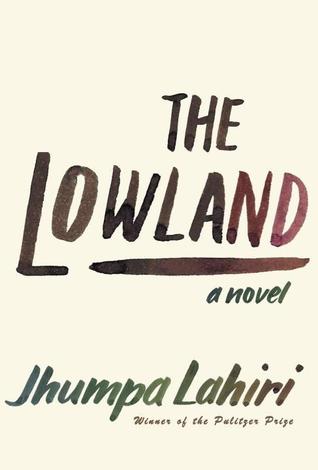
I do love the look, but the book world is getting a bit saturated with it. It make zero sense to me, for example, for Jhumpa Lahiri's new novel to have a parchment cover and watercolored words:

watercolor illustration as book jacket
Lahiri's most recent book, The Lowland
Seriously, what does that tell you about the book? Other than that the graphic designer who made the jacket likes to underline things. It has no connection with her previous work, even though her last book, with its gorgeous cover, was published by the same house.

Anyways, I do think that it can be used well, but I think it's interesting that it's being used across so many genres, whereas oftentimes typeface choices are so genre-limited. I noticed the following books in particular because they use a hand-lettered title, but it seems to jar with the genre, content, or audience one would think the publisher and author are trying to convey. Is this a case of graphic designer revolt?

Achebe             The Tree


WaughRoddy Doyle 


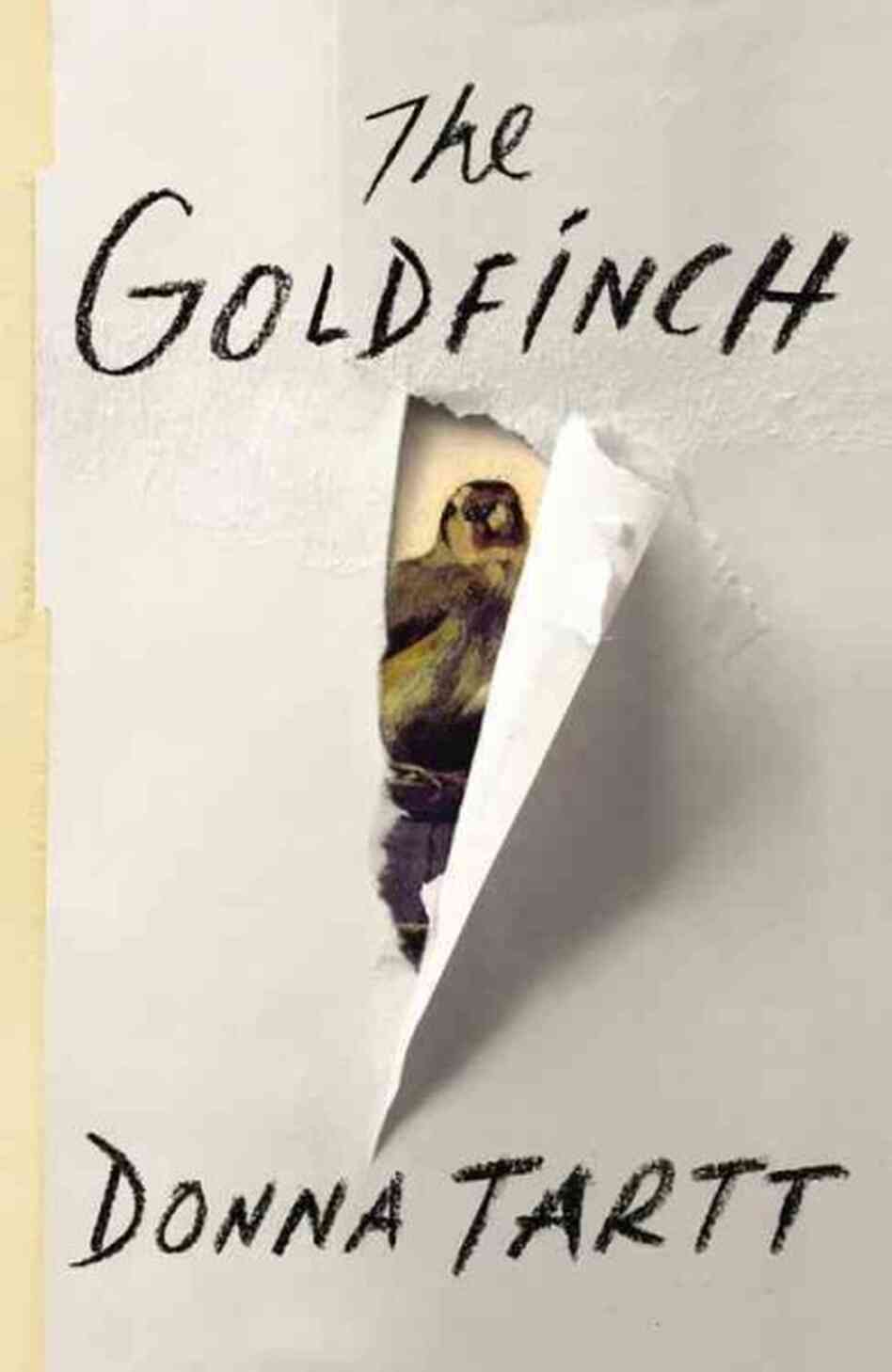
 Rosenstrach TarttPowers


I am sure these are all lovely books. Who could turn their nose up at Achebe? Roddy Doyle will have you laughing your head off. But WHY use the same signifiers for fiction and non-fiction? The answer has to be the aura of the handmade object, and the attempts of fine books to look not mass-produced, to look special, to look like you really need to buy and own this precious, hand-made just-for-you object. And to update classics to look fresh (Achebe and Waugh just won't resonate with current marketplaces otherwise, I guess?). As paper books war with ebooks for customer dollars, the materiality of the object is becoming emphasized as a positive. Ebooks aren't chipping away at hardbacked sales, but they've destroyed the massmarket, rack-size paperback. If you want to buy something a machine made, you'll download the digital version, and all the books in your pocket library will have the exact same font (typeface), the covers won't matter, and you'll likely delete or remove the book once you're done instead of passing it along to someone else and starting up the oh-so-desired word-of-mouth campaign. So I get the inspiration. It's possibly also behind the emphasis on chalkboards and personalization Etsy has been hammering for years. But you can't apply the same idea to everything! It's the cheap easy way to connect to current trends, but is it servicing the book or just demonstrating the in-the-know-ness of the designer?

OK, to pull my cranky pants all the way up, the worst offender in design, overall, bar none, of recent books in this trend is, in my opinion, Cartwheel. 


Holy crap I don't want to ever look at this jacket again (I got like three in their publicity carpet bombing exercise and have been trying to give them away). It makes no sense. I mean, I like the subtle curve in the actual title, and the spokes radiating from the center do evoke an actual cartwheel, but overall it just feels scattered and totally, totally unrelated to the novel -- and doesn't even have the excuse of echoing her previous book. There's a bird, and what seem to be post-its with rough-pencilled scrawl -- but as described in the jacket copy, the novel is basically a ripped-from-the-deadlines fictionalization of the Amanda Knox story. What the heck is the connection of this pinwheeling cover to an international tale of lurid crime and uncertain guilt? How does this stylishly designed cover tell me anything at all about the book? The cover is a vital piece of information to help a reader engage with a book, and this one, I believe, does a horrible disservice to book and author. It feels like a designer got fed-up with feedback and Portlandiaed the jacket.

Tuesday, November 19, 2013

Writing for Free, Reading for Free: The Economics of Academia and Publishing Today

Academics entering the media world tend to move from one exploitative arena (low-wage academic work) to another (unpaid freelance writing). But writing must never be an act of charity to a corporation. Ask for what you are worth—and do not accept that you are worth nothing. Insisting on payment for your labor is not a sign of entitlement. It is a right to which you are entitled.


Medium -- a new iteration of publishing/sharing writing/writing for free. Medium offers us all an audience because praise should be pay enough (though now, apparently, they are paying some writers decently). Medium was founded by Evan Williams (also, a liquor), who also founded Blogger (write for free -- for yourself and your friends), and has been in charge (possibly a founder? multiple stories abound) of Twitter (write for free, briefly, to the world, your friends, and clients). On Here and Now recently, Williams was asked about his new venture, and he described the year-old platform as providing journalism and stories to a wide audience who just can't find it elsewhere, apparently. He also emphasized the ability to share one's writing with the world, which writers just can't do elsewhere, apparently. Those darn editors and gate-keepers -- I thought that the internet was supposed to have knocked them down already? Williams evaded the interviewer's question of what void he was trying to fill, explaining that, really, this was a longer twitter. However, what he is actually replacing is the curated, edited magazine.

Sunday, June 2, 2013

Book Covers I Love


I am super into the silhouettes and paper cut outs I've seen all over the place lately, and I love the ways in which people are using those on book covers now, as seen in the next two images:

The Monsters of Templeton by L Groff
The Snow Child by Eowyn Ivey


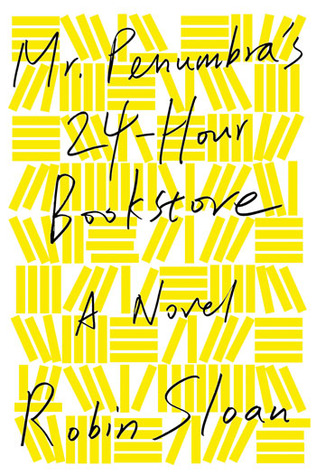
Mr. Penumbra's combines my favorite things: books, San Francisco, and something slightly magical. For a girl whose first job was selling books in a little indie bookstore on the CA coast, this book is irresistible  And the cover's use of neon that looks like highlighter -- and which glows in the dark -- is a fabulous wink at the shadow of "Penumbra" (*polishes her high school Latin*) and the fluorescence of a 24-hour bookshop.
Mr. Penumbra's 24-Hour Bookstore by Robin Sloan


Flora feels super-traditional, but with the edge of the initial letter of the title falling off the front cover, there's a bit of an edge. I love the grace and drama of the title, which looks like a signature, and the bright punch of the author's name against the blue of the dress.


Flora by Gail Godwin

Also, I want to read all the books.

Thursday, May 30, 2013

Money and Motivation

One of the ways in which spending your twenties as a grad student in a humanities department warps your view of yourself and your world is with regard to self-value. Not just "I must be a shitty person and scholar because I don't get this 'body without organs' " deal, but the work we do for which we are not paid, and the work for which we get paid so very, very little.

In graduate school, I planned events, I entered data, I taught myself software programs, I compiled webpages, I proof-read, I managed other graduate students, I researched, I read, I wrote, and I taught.

And for few of these gigs was I paid, and then, it was not well. This translates well to academia, where service and research are the perqs that you earn by teaching. You are grateful to be able to have the time and space to voluntarily, on your own time, research, serve on committees, mentor students, etc.

But this mindset, I am finding, is counter to everything outside of academia. I do not think the importance and value of a job can be measured by its salary. I do not think that those who earn $30,000 must or should work less hard than those who earn four times that. So that's good. But this belief in dedicating all to a job -- and in editing and writing "on the side" of the "real" job -- is not always helpful to getting ahead. I ask myself, is my genuine wish to work longer hours than I am paid fair to me and my partner? Really, I should be compensated for all time worked, so am I being a sucker by gladly bringing work home with me? Or since I am young and trying to build a career, should I be grateful for everything and anything I can get?

What's the difference between an underpaid, part-time editor working harder than s/he's being paid for and a young engineer at a startup sleeping at the company HQ and dedicating him/herself to their launch date? Is it just money? compensation? prestige? Or are they both naive, in fact, and should be rallying with other workers to demand fair wages?

One of the consequences of our new economy seems to be both flexibility and instability. If we are all eminently replaceable, we each must always be working harder than we are being paid in order to be the most valuable person to the company, it seems to me. Maybe all of the American economy is just catching up to a trick that academia's been playing on its citizens for many decades longer.

Tuesday, May 28, 2013

Where I am today

I finished my dissertation at 10 AM on March 28th, 2013. I was so worn out by the end that I am not sure that finishing was either a relief or a moment for celebration. It was more of a "This? This is what I had to do? All those years of paralysis and confusion and all I had to do was this?"

I felt let down by myself and, to be perfectly honest, by my advisors. I'm very proud of three of my chapters and I am glad I finished the last one and the intro. But, I am disappointed that despite my grand, ambitious ideas for the shape of the dissertation, it ended up being 200 pages, intro + 4 single author chapters. What a yawn. I don't want to know how many errors were in the bibliography. I still feel like as much of an impostor as I did throughout the process, only now I have a degree I feel like I earned through sheer forbearance rather than skill or knowledge. I don't think I know more now than I did six months ago, I just finally put my thoughts on paper. I feel like I wandered blindly for so long and spent so long worrying about their responses that I wasted years. One of my committee members apparently did not know when the submission deadline was and gave me feedback to totally revise my intro three days after I had submitted the document. I don't blame him at all -- I hadn't given him much time in the end to respond.

One of the unconscious reasons behind procrastination, for me, is that by cutting down on the time given to my advisors, and limiting the time I had left, I knew that they couldn't ask me to do huge revisions. Even if that would have been better for the scholarship. There simply wouldn't be time, so we band-aided the poor diss and shuffled it off stage.

I decided to embargo my dissertation for the maximum time allowed, two years, partially because I am telling myself that I will publish better versions of my chapters, and partially because I am deeply ashamed that it isn't better. I had the chance to really study under my advisors, and I never took it because I was too afraid of their criticism and felt too stupid to engage them in real, deep conversations about poetry, literature, and theory. I never even read half the books I wanted to, and what is a sadder take away from eight years of graduate study of literature?

I hope to revise my intro over this summer, and maybe tack on that last conclusion I intended to write, and correct any glaring typos or bibliographic problems. I also would like to turn some of the lost material into articles -- the chapter on the state of the poetry-publishing industry in Ireland and my Heaney/Boland chapter that never materialized.

I want to apply for academic jobs this fall, even though I got nowhere last year. But my current editorial job is looking shaky -- the publisher is in some financial straits, and I'm not sure my direct boss is going to stick it out. I feel very nervous, and I need to find some work immediately in case everything goes pear-shaped, which is pretty hard to do when you are new-ish to both an area and an industry.  We'll see.

Friday, March 15, 2013

Mad Dash

I have had about ten days to work  on my introduction, and got about fifteen pages written -- all of which summarized Irish history -- which took a lot of work. Then I had a meeting with the helpful professor at the local campus, who strongly suggested that this was going to be too broad and too long and wasn't a real introduction to my project.

So, what I need to do instead is explain my argument and the reasons for it. In other words, do exactly what is so difficult that I do everything I can to avoid it. I would much rather just summarize Irish history for a while and hope that explains why I am doing my study. That meeting was on Tuesday, and I've just been clenched up in anxiety and frustration since then. I think I've written half a sentence since. I was supposed to turn this in yesterday, and instead it's almost two and I've got half a sentence done. I feel sick to my stomach with how hard this is going to be and how little time I have to do it in. My main argument is "this is different! and cool! just like Ireland!" and I've been repeatedly told this isn't a good enough thesis, which is one of the things that disenchants me about academia. Why does a close reading + historical context-based reading have to say anything other than "look at what I found"?

Tomorrow is full, too: I had a sealant recently applied by the dentist crack so I had to make an emergency appointment. My back hates me spending 12 hours at my deck, so I need to get a massage, and I was supposed to have lunch with a colleague tomorrow, but I didn't realize we had a dinner scheduled with friends. My boyfriend doesn't want me to skip out on our regular dinner with friends, so pushed me to cancel my lunch instead. I strongly do not want to attend this dinner. I want the hours to work or sleep. I don't care as much about these regular dinners as he does, probably because they are more his friends than mine.

I tried to get up early today to work, and I did read an essay that was great, but I really didn't sit down to write until 6 PM, in my usual fashion. I genuinely don't know what happens to me during daylight hours.

I've taken the last two weeks off from the publishing gig to work on my diss, and apparently there have been numerous crises. I am looking forward to digging back in, but having these two weeks off has also been great. I am not exhausted at 5 PM, I don't have to show up anywhere at a particular time, my boyfriend is also working from home, so we get to hang out, and I haven't had to negotiate once. Back on Monday, though.

Monday, March 11, 2013

Typography and Book Design

I am mostly an amateur enthusiast when it comes to book design and typography. I have handset letterpress and made my own very tiny book, I have read guides on typography (for fun, mind you), and have studied the material construction of books of poetry as part of my dissertation. So, I know the terminology, but I have not worked with inDesign, I've never worked with commercial printers, nor have I worked within comercial constraints.

Still, I have OPINIONS -- of course I do. And when our galleys came back with a half inch, max, of margins, 12-point Times New Roman font, and single spacing, I nearly flipped. I've already explained several times that you can't use a regular old serif typeface (ahem, "font" so I don't sound like a ponce) as your typeface for a title. And that you should match your title page and chapter headings closely in spirit to the typeface used on the cover. All you have to do to know that is look at literally ANY decent book.

These galleys looked like someone just took a Word file and printed it -- which was basically what was done. I felt bad, because it had looked fine as a PDF, so I OK'd it. It was astonishing how different it looked on screen and in print. Amazing how cramped and dense 35 lines per page looks compared to 25.

I think one thing my grad degree has taught me is how to learn the conventions of one's genre, and how to appear to belong. And how to teach yourself everything, since no-one else will do it for you. So I get frustrated when people don't do that.

Thursday, March 7, 2013

Three Weeks to Go

All of February, and the first five days of March, I was working on a chapter about the elusive, creative  Irish poet Catherine Walsh. I find her asyntactic, paratactic writing to be extraordinarily challenging to make an argument about, because to me, it could be so easy to prove wrong. This, I've realized has been a huge problem of mine in grad school: I can always see the holes in my own argument, and that not only paralyzes me, but I keep inserting caveats and undermining my own claims. In high school I was an attorney in our Mock Trial program for  three years. I was very good at it, but partly because I always felt that I was lying because I could see all the holes and gaps in my argument and the strengths of the oppositions, so I frantically tried to fill those gaps in as much as possible. Yet, the feeling of telling half-truths was always there.

But, in any case, I finished writing 40 pages. I sent it off, despite the fact that I knew there were huge problems in it (like.... not having a convincing argument), but I had to move on, so I let it go. I promptly received feedback from one of my committee members to the effect that he loved my close-readings, but did not perceive a strong structure holding it together, and wants me to rewrite/revise. Which I expected. I didn't expect the praise for the readings, nor for him to get back to me so quickly!

I'm trying to move forward to writing the intro now. At this point, sans intro, I believe I would estimate my dissertation to be about 140 pp. A bit light, but that doesn't include the interviews I'll be including. I've been looking at tons of intros -- they vary from 15-50 pages, and I've even heard of a 95 page one! I am just hoping mine will be 30. I am excited about it, partially because it requires mostly a literature review and historical background for the project. I think it should be a matter of positioning myself among the other scholars.  My dissertation is light on footnotes, especially this most recently chapter, which I am afraid might be symptomatic of a lack of deep contextualizing reading. Hopefully I'll have the opportunity to make it up in the intro.

I am taking time off from work to finish this project -- thank goodness my boss is OK with that. Only 1 more week, though, and then I'm back. That means 7 days to write the intro, then, as quickly as possible, address issues with the first  chapter, add another 10 pp to turn 1 chapter into 2 shorter ones, and rewrite my 3rd chapter. I hope the latter Herculean tasks can be accomplished in 10 days.

Simultaneously, I am trying to oversee production, acquisition, editing, etc for the publishing company, Right now, I am taking a backseat, but that doesn't stop the publisher complaining to me of costs (maybe he shouldn't have an amateur do the typesetting and maybe he should pay his printers) and the authors complaining to me about missing checks. The only thing I can do abut either of those is nag the people with money.

I joined a website called Versatile Ph.D. recently. Great forums and support for making a career outside of academia. My only concern is how many of the English Ph.D.s are now either dissertation editors (perpetuating the very system that they left) or are freelance editors. Both seem like unsavory choices, to me, but maybe I only see the instability of freelance work and not its upsides.

OK: I need to get a page or two written today, and then I will be on the right track! 5 pages every day for the next 7 days will sort me out!

Monday, February 25, 2013

So much to say, so much to do...

A few dashes....

  • The Ecopoetics Conference at Berkeley this weekend blew my mind. I didn't even get to meet all the folks who inspire me so much who were there -- Jed Rasula, Jennifer Scappatone, etc. -- but the talks and the people I did get to meet and the conversations I had with new friends and old were amazing. I was baffled, frustrated, excited, challenged, bored, intrigued, well-fed, comforted, and I scribbled down so many names of poets and writers and theorists I had never heard of before. This is exactly what I value in academia. If this were what being a professor is, I would embrace it wholeheartedly. This is what I thought academia would be. However, as everyone was getting ready to leave today, I kept hearing about grading papers, prepping classes, etc. Teaching takes so much of my energy and effort just to be middling at it, and I have not missed it for an instant. I told several people that I was planning on leaving academia, and while my reasons seem flimsy sometimes (I don't want to move! Uncertainty!) and the financial prospects seem weak, I feel happy (mostly. sometimes. will they let me back in to their conferences?)
  • I have to write the 2nd half of my Catherine Walsh chapter this week. I took last week to write about parking lots and thirdspaces for the ecopoetics conference (and I honestly think I'll get a paper out of it!), and now I am deep in the weeds, folks.
  • I am so fucking obssessed with Arcade Fire right now. Their album The Suburbs was my soundtrack for researching and writing my ecopoetics paper, "Why Walk When You Can Drive?: Parking Lot Landscapes in Contemporary American Poetry." PLEASE do yrselves a favor and watch their "Sprawl II" video over and over.
  • My god, this advice from Mr. Nissan never gets less relevant: DON’T PROCRASTINATE
Procrastination is an alluring siren taunting you to Google the country where Balki from Perfect Strangers was from, and to arrange sticky notes on your dog in the shape of hilarious dog shorts. A wicked temptress beckoning you to watch your children, and take showers. Well, it’s time to look procrastination in the eye and tell that seafaring wench, “Sorry not today, today I write."